

About
Your regenerative carbon farm and service provider in Southwest Colorado.
Since ESTD 2023
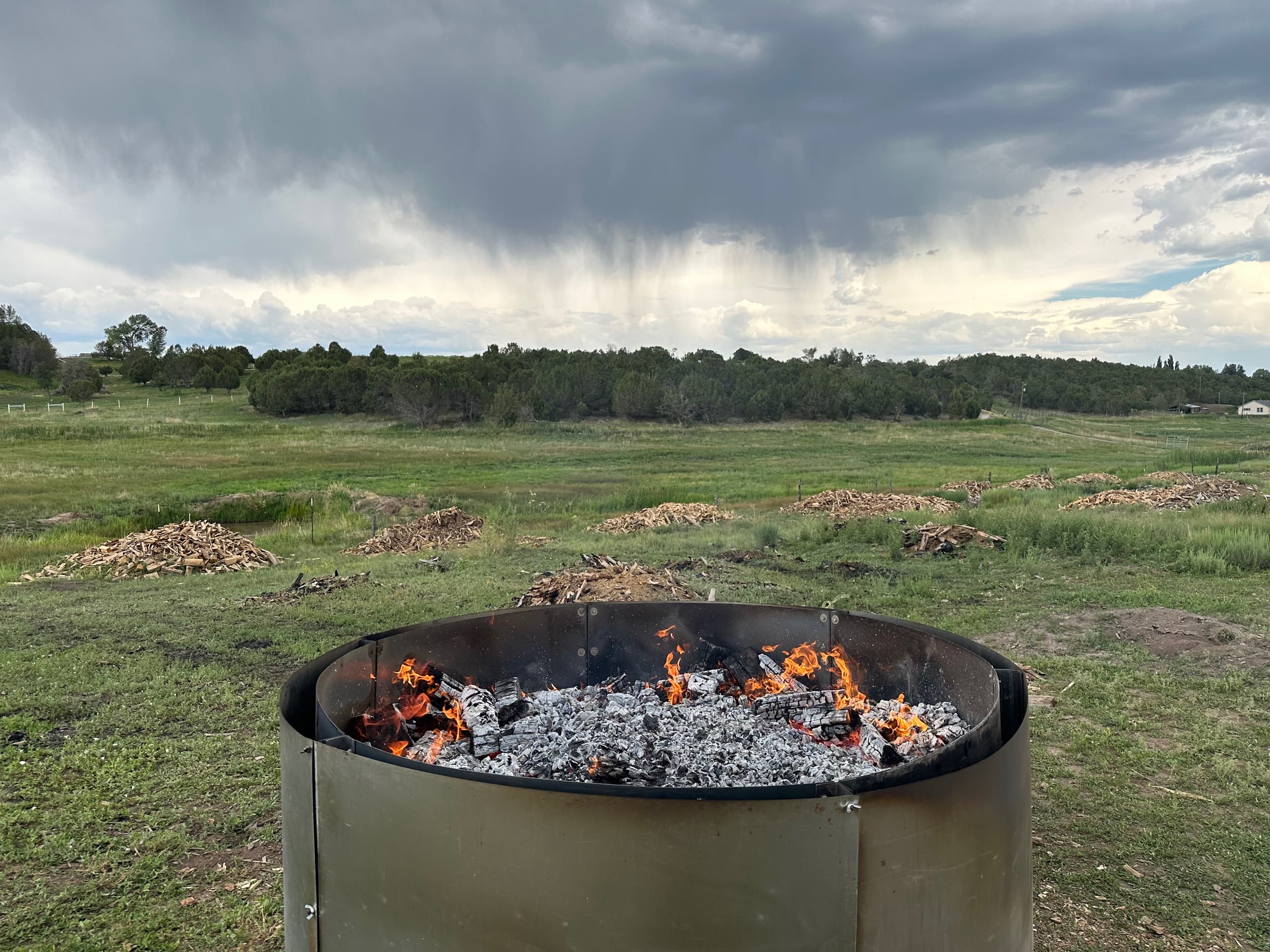
Gardens of Fire is a regenerative carbon farm in Durango, Colorado, advancing low-tech biochar production.
We collaborate with educational institutions, local farms, and community organizations to put biochar in the hands of small and mid-scale operators — the people who work the land they live on. Our network of practitioners spans the globe, and we’re always looking for new partnerships to advance the industry.
Values · 01
Low-Tech, Human-Scale Biochar
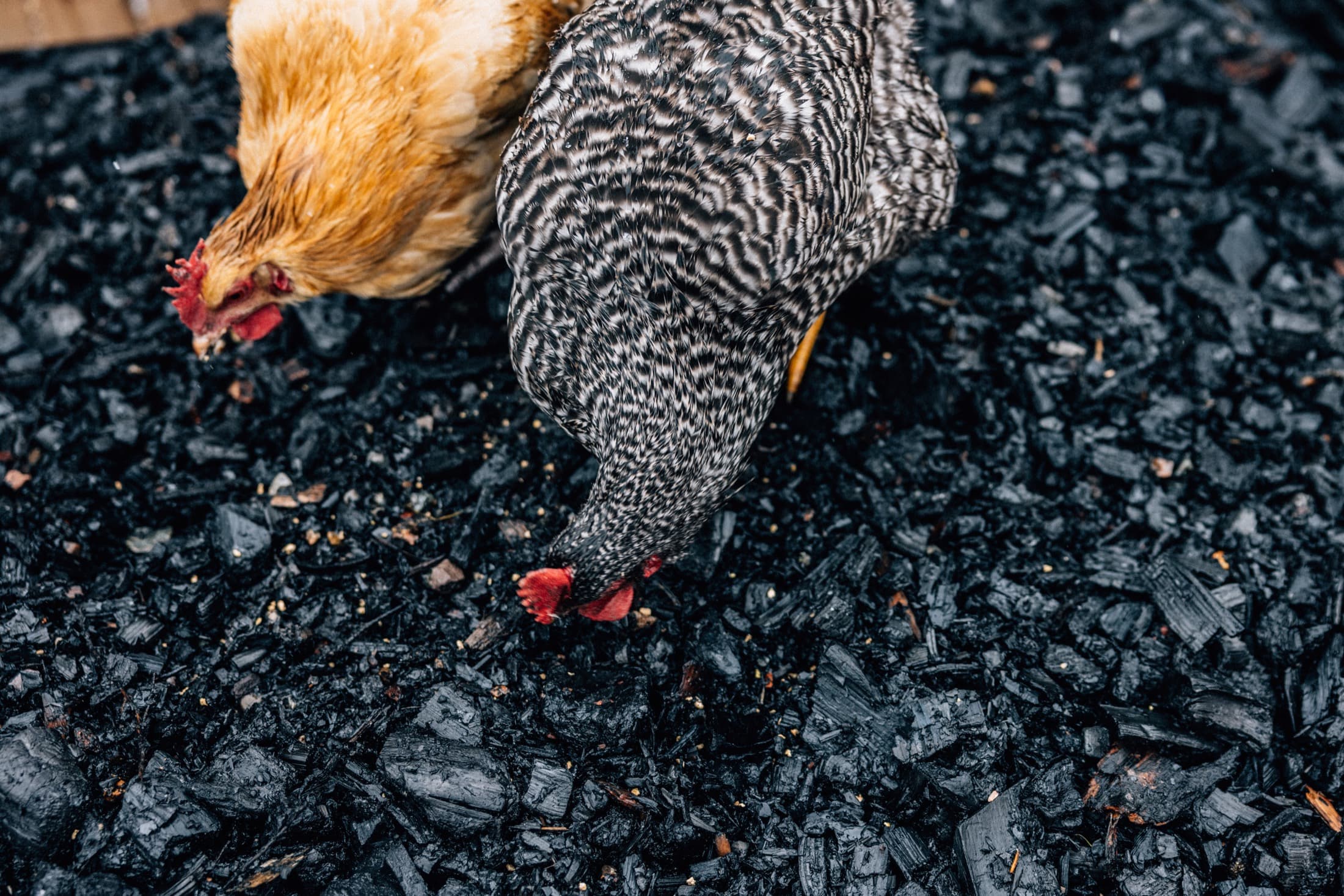
We advance low-tech biochar production — flame-cap kilns, pit burns, and repurposed barrel kilns that any determined operator can build and master. No industrial plant required: we champion the small and mid-scale producer turning nearby waste wood into carbon that stays in the community’s soils — holding water, cutting wildfire fuel loads, and feeding nutrient-dense ground.
Values · 02
Collaboration & Research
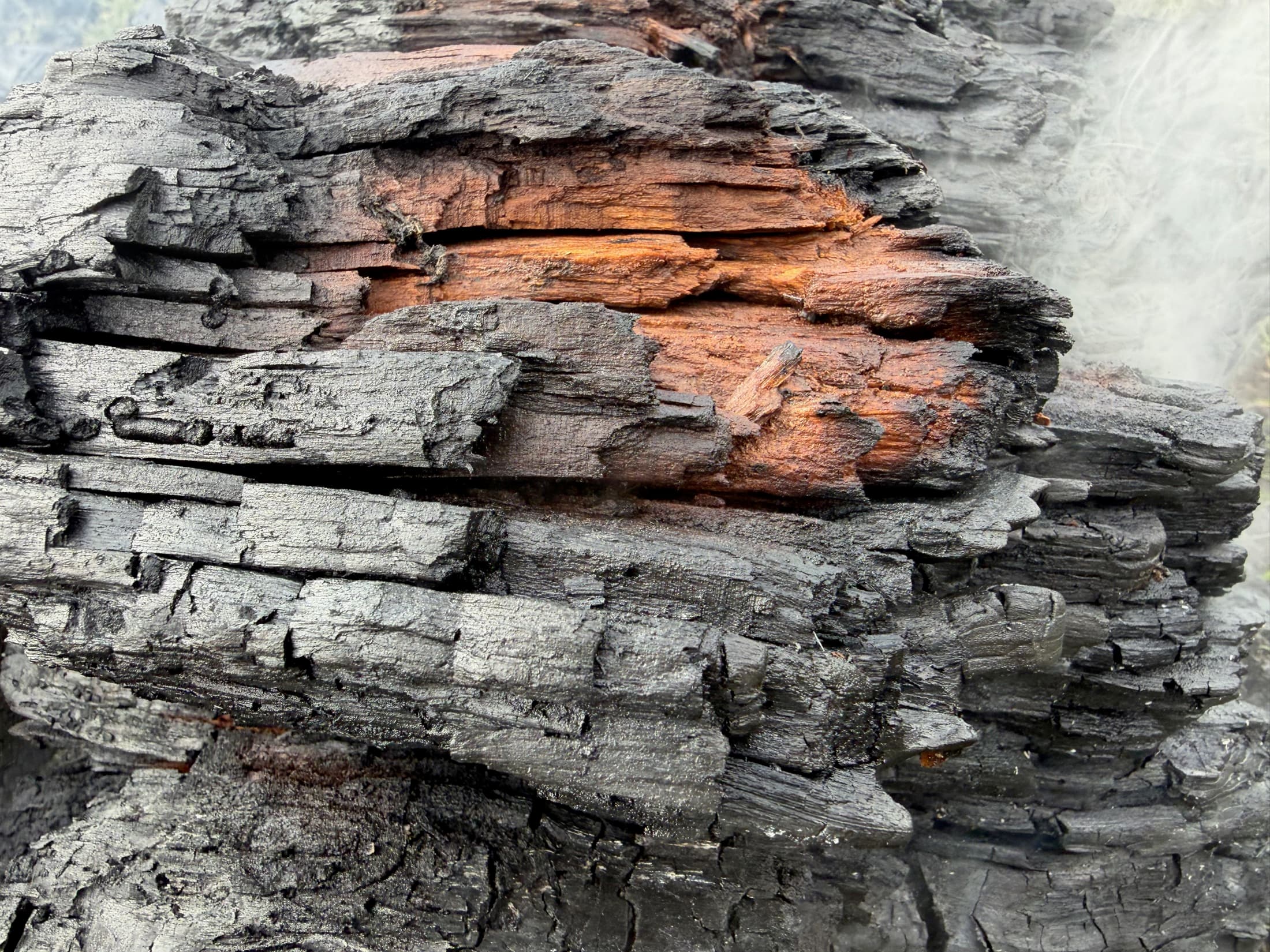
We learn burn by burn, and we refuse to learn alone. We’ve completed burns in partnership with local farms and community entities across Colorado, and we work alongside educational institutions — from a living-soil research program to a college land-management program — planning multi-year projects and grant applications. From backyard trials to master’s research, every result folds back into the next burn.
Values · 03
Education & Content Creation
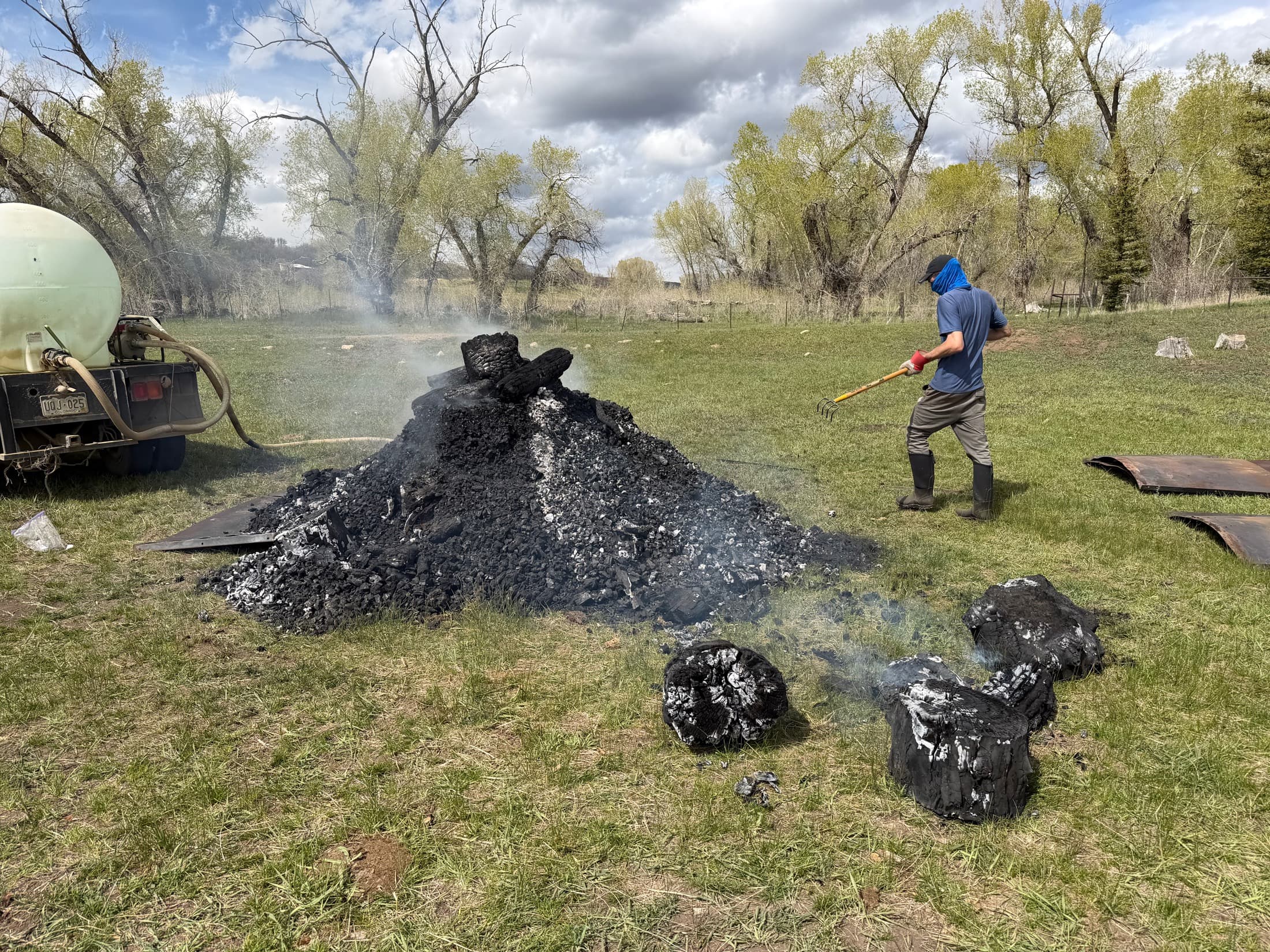
A craft that isn’t shared dies with its keeper. Through workshops, on-farm demonstrations, guides, and the content we publish, we teach anyone who works the land — students of any age included — to make and use their own biochar. What we’re most proud of is what we help our community do: we’re impact-focused.
Our history
It started with a pit
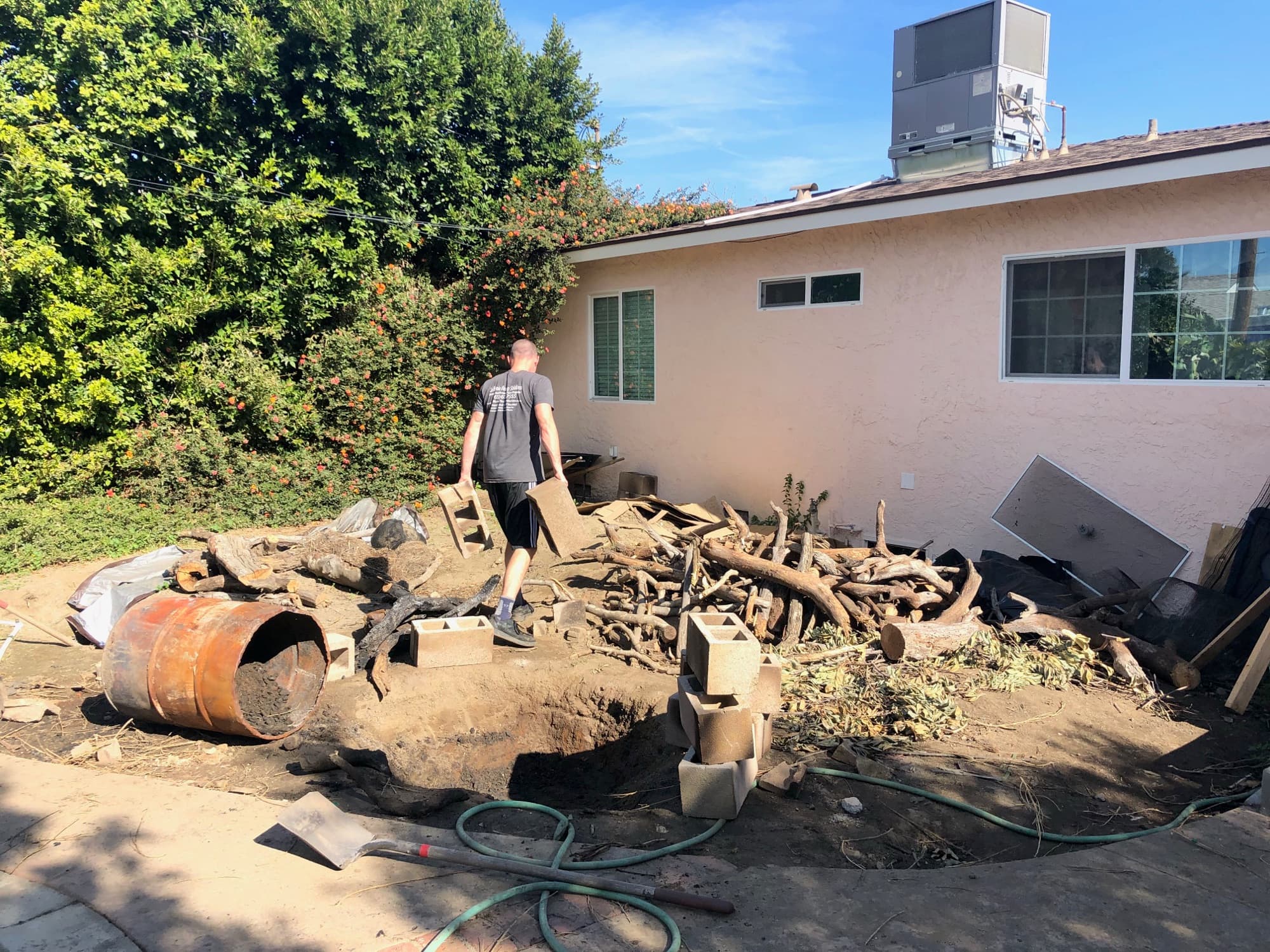
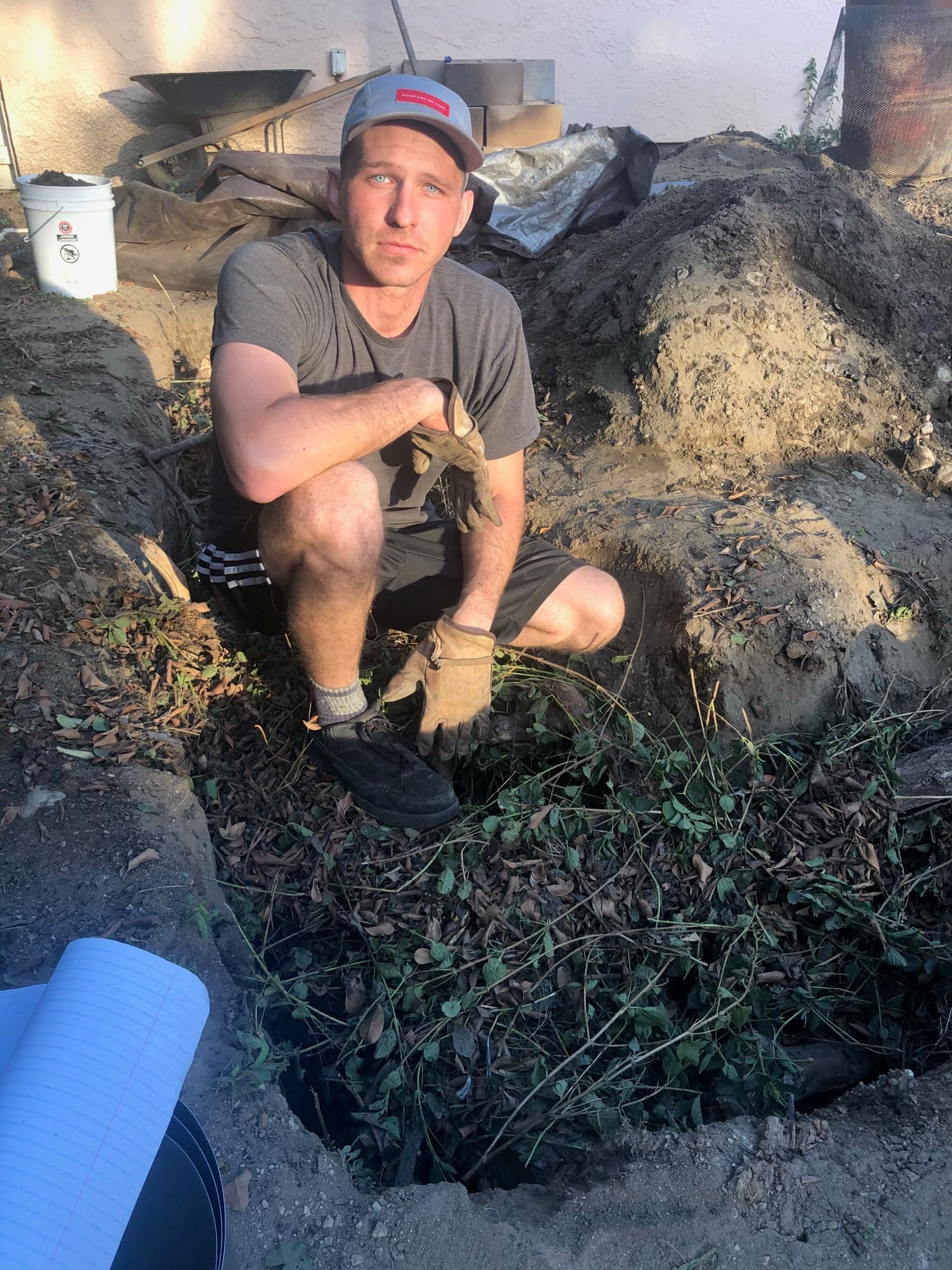
In January 2020, long before the farm, brothers Pav and Sam built an inverted hugelkultur pit in a borrowed Los Angeles backyard — dug deep and layered with logs and brush. Sam, a veteran studying living soil so he could grow his own medicine, kept hitting one word in his research: biochar. He recognized it immediately as a key piece of the puzzle.
The trail led back thousands of years, to terra preta — the charcoal-rich dark earths of the Amazon, made fertile by ancient hands and fertile still. Sam saw the vision first, and still carries it; Pav builds the rails it runs on. Everything since has followed from that pit.
January 2020
The backyard pit
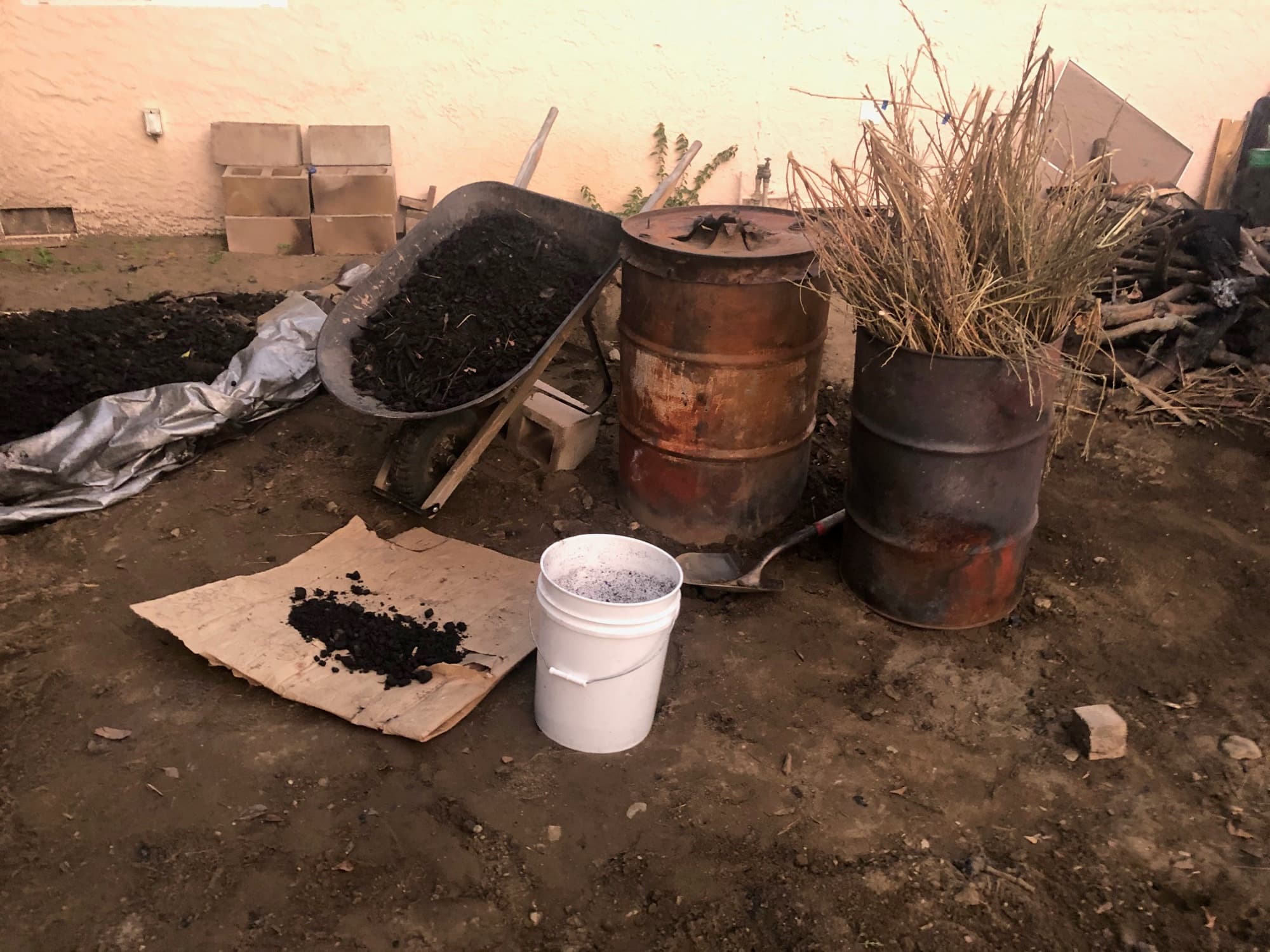
A borrowed backyard in Los Angeles: the first inverted hugelkultur pit, dug deep and layered with logs and brush — and Pav’s first few pounds of char, made alongside Sam.
2021
The leap
A shared intent to leave the city for land, and a whirlwind out-of-state purchase of an old-ranch property outside Durango — the doors just opened. We moved in that December.
2023
Gardens of Fire established
Two years of groundwork made official — networking, brand building, and burns completed in partnership with local farms and community entities across Colorado.
Today
The launch pad
Partnerships with a living-soil research program and a college land-management program; water restoration with our neighbors across the old ranch; permitting advancing with the state — and a launch into research, content creation, community building, and carbon farming with carbon-credit programs.
Scenes from the January 2020 build.
Who we work with
Local farmers
Field-scale residue recycling and soil building — from slash to spread, we bring the fire and the knowledge to you.
Gardeners
Carbon charged with microbes and fungi — naturally charged biochar blends for beds, boxes, and backyard soil that lasts.
HOAs
Biochar is a community asset: fire mitigation, water management, and healthier, more robust shared greens.
Municipalities
Educational opportunities for community members, plus green-waste diversion and fuel-load reduction that ends up in local soil.
Private landowners
Slash management and soil building across acreage of any size.
Small businesses
Wood and crop waste streams turned into carbon — a story worth telling.
Students
Curious at any age? From classroom visits to hands-on burns, we want every student exploring biochar — start with a workshop.
* All of it with the potential for ongoing carbon-sequestration programs.
Experts and beginners alike.